A nor'easter on the East End does not pass quickly. The wind holds for a day or two, the rain comes in sideways, and the bays push water up into the low streets. When it is over, our phone starts ringing. A caretaker opens a house in Hampton Bays and the basement carpet squishes underfoot. A Montauk owner gets a photo of a wool rug sitting in a puddle by the slider. A family in Springs comes out for the weekend and smells something musty that was not there before.
Most of these homes were closed or half empty when the storm hit. Nobody saw the water come in, so it sat. That is what turns a small leak into a big job. This guide is what we tell owners, house managers and caretakers about wet rugs and carpet after a storm: what to do first, what to leave alone, and when to call us.
Where Storm Water Gets Into Hamptons Houses
We see the same weak spots after almost every big storm:
- Basements and window wells. Houses close to the bay or on low ground can take in water through foundation walls and window wells when the ground is soaked.
- Sliders and French doors. Wind-driven rain gets under doors that face the storm, and the rug just inside takes the hit.
- Roofs and skylights. A slow drip onto a bedroom rug can go on for days in a closed house.
- Mudrooms and garages. Rooms that sit a step lower than the house collect water first, and that is often where spare rugs are stored.
In an empty house, the rug or carpet under any of these spots can stay wet a long time before someone walks in.
Why Time Matters With Wet Rugs and Carpet
Dyes Can Run
Many wool and Oriental rugs have colors that bleed when they stay wet. The longer the rug sits in water, the more the red and blue dyes can move into the ivory and white parts of the design. Fresh dye bleed can often be treated. Old, set dye bleed is much harder.
Mildew Starts Where You Cannot See It
Carpet pad and the back of a rug hold water like a sponge. In a cold house with the heat turned down, nothing dries. That is when the musty smell starts, and mildew can grow on the underside of a rug while the top still looks fine.
Natural Fibers Brown and Shrink
Sisal, seagrass and jute are everywhere in beach houses, and water is their worst enemy. A soaked natural-fiber rug can turn brown, ripple and shrink. We explain why in our guide to sisal, seagrass and jute rug care.
Storm Water Is Not Clean Water
A drip from the roof is one thing. Water that comes in from outside, from the yard, the street or the bay, carries soil, salt and bacteria. Carpet and pad soaked by that kind of water need a different decision than a small, clean leak.
First Steps When You Find Water
- Stay safe. If water is near outlets, the electric panel or appliances, stay out and call an electrician or the utility first.
- Stop the source if you can. Close the slider, clear the window well drain, put a bucket under the drip.
- Take photos before you move anything. Your insurance company will want to see what happened.
- Get rugs off the wet floor. Lift area rugs off wet carpet or wood floors. A wet rug left on hardwood can damage the floor too.
- Lay rugs flat, face up, in a dry room. Do not fold them or roll them.
- Lift furniture. Put foil squares or plastic blocks under wood legs so stain from the wood does not bleed into the carpet.
- Move the air. Turn the heat back up, run fans and a dehumidifier, and open windows if the weather allows.
- Make the calls. Call us for rugs, carpet and upholstery. If a whole floor flooded, also call your insurance company and a water damage company.
What NOT to Do
- Do not roll up a wet rug and leave it in the garage "for later." It will mildew inside the roll.
- Do not dry a wool or silk rug next to a heater or out in the sun. It can shrink, fade or crack.
- Do not use a regular household vacuum on standing water.
- Do not walk back and forth on soaked carpet. The backing is weak when wet and can come loose.
- Do not pour bleach or strong cleaners on a wet rug. They can strip the color.
- Do not cover a musty smell with spray. The smell means something is still wet.
- Do not wet a sisal, seagrass or jute rug again to "rinse it out."
How We Handle Wet Rugs, Carpet and Furniture
Area rugs. With our rug cleaning in Montauk and across the East End, we pick up wet or stained rugs from the house for free and take them to our own rug plant. Each rug is dusted, color tested, washed, rinsed and dried flat in a controlled drying room. Then we bring it back, also free. Dye bleed and odor are much easier to treat when we get the rug soon after the storm. Sisal, seagrass and jute get a low-moisture method made for those fibers. You can read more on our fine and natural-fiber rug cleaning page.
Wall-to-wall carpet. This one takes an honest look. If a small area got wet from clean rain water and it was dried fast, our carpet steam cleaning in Hampton Bays can clean and deodorize it once the carpet and pad are fully dry. If a whole basement took in water from outside, the pad usually has to be replaced and the room dried out by a water damage company first. We will tell you which one you have. We do not sell a cleaning that will not fix the problem.
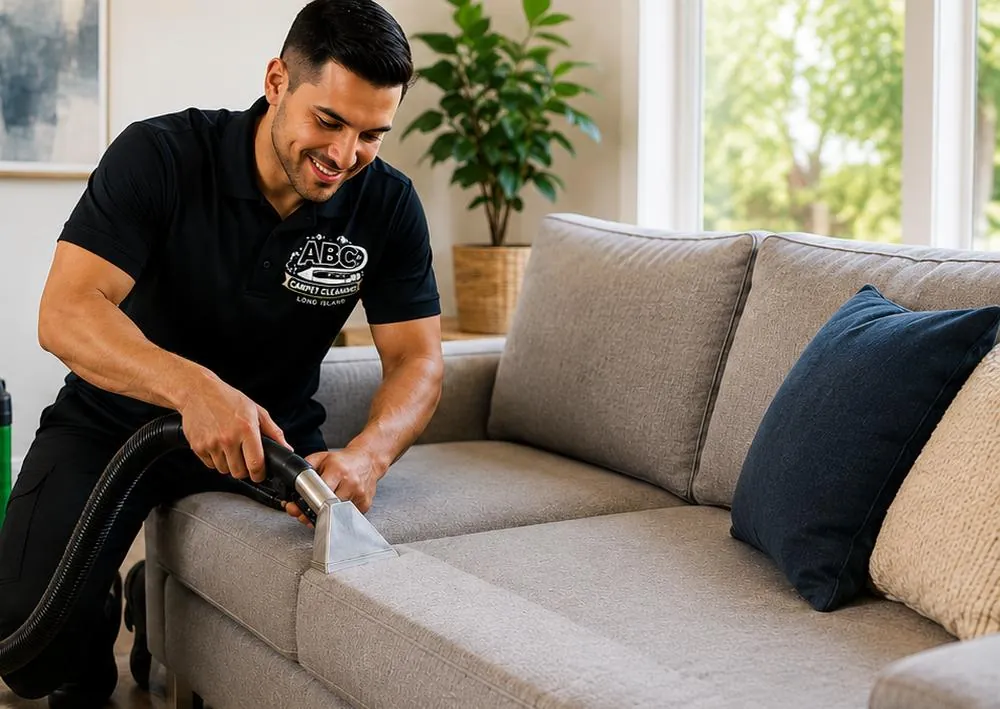
Sofas and chairs. Skirts and legs that sat in water can wick stains up into the fabric. Once the piece is dry, we clean the upholstery in place and treat the water lines.
Closed Houses, Caretakers and Storm Checks
Many Hamptons homes sit empty from fall until spring. A caretaker walk-through after every big storm is the cheapest protection you can have. Ask them to check basement corners, the floor under sliders and skylights, and to lift a corner of any rug near a door.
We work with house managers and caretakers when owners are away. They let us in, we do the work, and we tell them when we are done. Our house opening and closing service in Springs covers carpets, rugs and upholstery in one visit, and our winter house closing checklist shows what to do before you lock up. We are licensed and insured, and we can send a certificate of insurance on request.
When to Call a Pro
Call us if:
- A wool, Oriental, silk or natural-fiber rug got wet.
- You see colors running or a dark ring on a rug.
- Carpet or pad is still damp after a day of fans and heat.
- The house smells musty after a storm, even if you cannot find water.
- A sofa or chair has a water line on the fabric.
- You want the house checked and cleaned before guests come out for the holidays.
We are open 24 hours, 7 days a week, all year, from our shop at 159 Pantigo Rd in East Hampton. We serve Hampton Bays, Montauk, Springs and the rest of the East End, and most Hamptons calls are handled same-day.
Storm Water and Rug FAQ
Can a rug be saved after it sat in storm water?
Often, yes, if it is washed soon. Wool rugs usually come back well after a full wash at a rug plant. The longer a rug stays wet, the higher the risk of dye bleed, mildew and a weak foundation. Call us as soon as you find it.
Should we pull up wet wall-to-wall carpet ourselves?
Not before you take photos and call your insurance company. Small wet areas can often be dried and cleaned. Large areas soaked by water from outside usually need the pad replaced and the room dried by a water damage company first. We will tell you honestly what we see.
How do you dry a wet Oriental rug?
We take it to our own rug plant, with free pickup and delivery. It is washed, rinsed and dried flat in a controlled drying room, never in the sun or next to a heater.
Why does the house smell musty weeks after the storm?
Something is still damp, usually the carpet pad, the back of a rug or the bottom of a sofa. A spray covers it for a day. The wet material has to be dried and cleaned, or replaced.
Do you come out to Hampton Bays and Montauk after a storm?
Yes. We are open 24 hours, 7 days a week, all year, and most Hamptons calls are handled same-day. We also work with your caretaker if you are not out east. Call (631) 315-2185.
Book Your Hamptons Storm Cleanup
Since 2005, our certified technicians have cleaned East End carpets and rugs with a 100% satisfaction guarantee and free rug pickup & delivery to our own rug plant.
Call (631) 315-2185 Get a Free Estimate